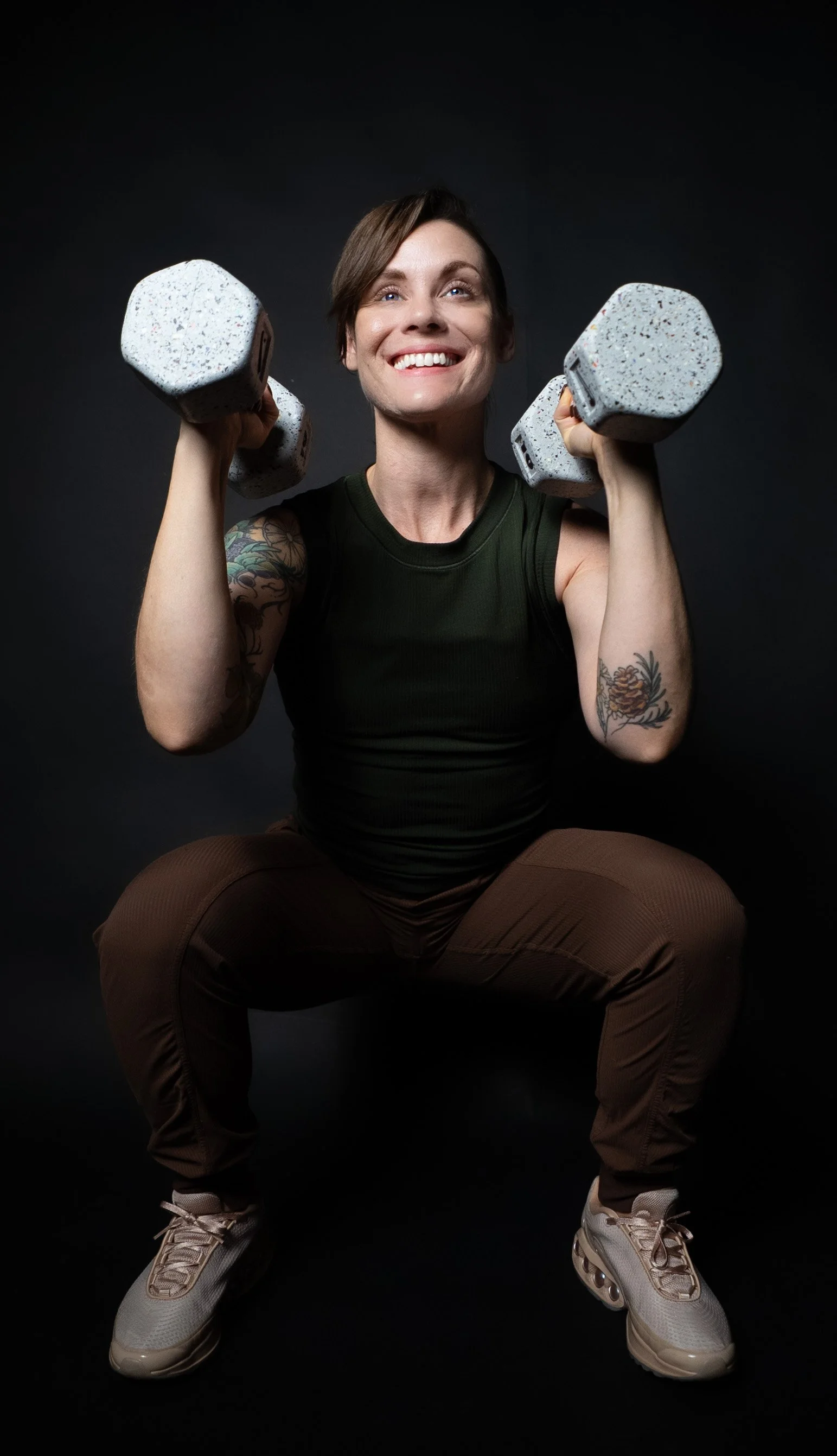
Personal Training for Prenatal and postnatal
Strength training during the First trimester
During this time you may be experiencing some discomfort like nausea, breast tenderness, sleep disturbances, or worry about miscarriage, for example. We can address this in your workout through less time getting up and down from the floor and lowering the intensity of your cardio and weight lifting.
Strength training during the second trimester
At this time you may or may not be experiencing a boost in energy. Wherever you are, I’ll continue to make adjustments based on your physical development. I’ll include spinal and hip stretches and glute and upper back strength exercises to support the growth of you and baby. You may not be as comfortable lying on your back now, so I’ll add support under your upper back.
Strength training during the Third trimester
Now, you’ll be preparing for birth. We’ll continue doing some pelvic floor endurance with breathing, and emphasize allowing the pelvic floor to relax at times while the lower abs work in breath and strength exercises. I’ll keep an eye out for any bulging or doming along your linea alba incase of excessive pressure from the growth of baby with strength training or body position.
postnatal Exercise
Clearance to exercise
Clearance to return to exercise is necessary before entering into a personal training program with me. Regardless of c-section or vaginal birth I will need to know you have clearance from your OBGYN. This may take 6 weeks, or longer. Once you’re released, we begin evolving your strength training program.
one year of postnatal exercise
During this postpartum period your workout will need to remain flexible. Let’s be realistic on how much time you have each week to exercise with the demands of motherhood. You do not need to have it all together. There is an emphasis here on getting rest and doing exercise when possible.
Three-phase postpartum exercise template
Phase 1: Rehab and Recovery (0-6 weeks)
Six weeks provides a guideline for recovery after birth and is not a standard rule. In many cases recovery after birth takes longer.
Focus this time on rest, connecting with baby, rehab, and starting the exercise when feeling ready.
Phase 2: Return to Exercise (7-18 weeks)
Move from recovery and rehab to diverse movement starting with low sets x reps, weight, and impact, and eventually full activity.
If you’ve given birth more than 7-18 weeks and haven’t been exercising, you’ll start off exercises in this phase.
Phase 3: Prime and Prepare (19-42 weeks)
Aside from possible complications and symptoms during Phase 2, your exercise can advance to wherever you want it to.
This can include higher sets x reps, weight, impact, and jumping and running.
Girls Gone Strong Pre-& Postnatal Coaching Certification
What People Are Saying
-
I can run around in the backyard with my son without worrying about my pelvic floor or tiring too soon. I can carry around my daughter throughout the day without my back or arms aching.
— Daniela B.
-
Thanks to her training, I haven't struggled with many minor troubles which happen to most pregnant women such as a leg cramp, a severe back pain, stiff shoulders & neck etc.
— Kana Ogura
-
Before Brie, I was having pain in my arms, knee and lower back. I felt weak and was really having a hard time physically. Weekly sessions with Brie keeps me in check and mindful of my body!
— Lenci B.
Frequently Asked Questions
-
Yes! With clearance from your OBGYN and any exercise considerations I can design a safe strength training program for you. It is possible for you to gain muscle and feel stronger!
-
Getting started is simple. Book your free 30 minute consultation call below and explore my personal training package offerings. Feel free to ask any additional questions you have during our call.
-
I come to you, either at your home, condo gym, office, in Miami, or virtually through google meets.
-
Your safety is my top priority. I’m happy to speak with your OBGYN or get from you any exercise considerations your doctor recommends. We will implement this into your exercise sessions and communicate on energy level, any spotting, or discomfort. Prenatal fitness is more about mitigating muscle loss than gaining muscle if you’re already lifting weights.
-
I have a flexible cancelation policy for new moms. If you need to cancel within my 24-hour cancelation window, you can reschedule that session within that week. If session falls on a Friday, we can look into a session early the next week. Additionally, if you want exercise suggestions to do on your own, we can work on that too.
-
At minimum, the size of two yoga mats is generally enough space for your workout sessions.
-
Yes! I’ll monitor your workout intensity, keeping this low, and avoid any sustained holds like planks and glute bridges. Also, I’ll check to be sure your not holding your breath at any point during exercise which can increase your blood pressure.
-
Leaking urine is a sign that your pelvic floor muscles are either too tight or too lose. Ether case is common, but not normal. In your exercise we can get to work on pelvic floor engagement and disengagement via breath and notice at which point in exercise or your day you tend to experience symptoms. It’s out of my scope to assess whether or not you have tight or lose pelvic floor muscles and I can refer you to a pelvic floor physiotherapist if you don’t see an improvement on this in our work together.
Shop Brie’s Personal Training Packages
Exercise for pregnancy
✳︎
custom fitness design
✳︎
strength for motherhood
✳︎
exercise for baby
✳︎
mind and body
✳︎
Exercise for pregnancy ✳︎ custom fitness design ✳︎ strength for motherhood ✳︎ exercise for baby ✳︎ mind and body ✳︎
Let’s Work Together